Why Axon and Arbor?

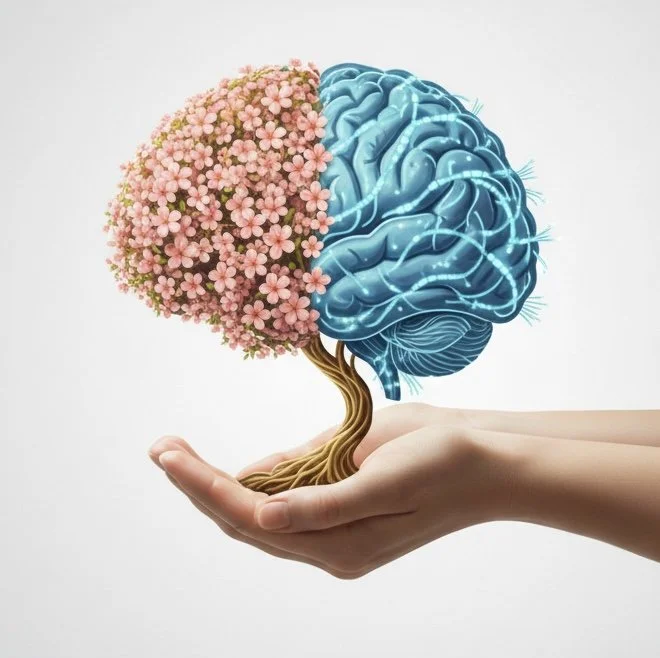
The journey to discovering the perfect solution for all mental illness is uncovering and studying the axons and arbors that make up our brains. Why?
Studying axons and arbors is essential because modern neuroscience increasingly views mental illness not as a localized "broken" part of the brain, but as a disorder of the network.
If the brain is a biological computer, the axons are the long-distance cables connecting different cities, and the arbors (the branching dendrites and axonal terminals) are the complex "local wiring" that allows individual neighborhoods to communicate. When these cables are frayed, misdirected, or "pruned" incorrectly, the entire system’s information processing breaks down.
Here is why these specific structures are the frontier of mental health discovery:
1. The "Connectome" vs. Chemical Imbalance
For decades, we focused on "chemical imbalances" (like low serotonin). However, medications that fix chemicals often take weeks to work, or don't work at all. This suggests the underlying issue is the physical wiring.
• Axons form the "White Matter" of your brain. If these long-range connections are weak, different regions (like the emotional amygdala and the logical prefrontal cortex) cannot "talk" to each other, leading to the emotional dysregulation seen in Depression and Bipolar Disorder.
• Arbors are where the actual computation happens. If a neuron’s dendritic arbor is shrunken (common in chronic stress), it loses the ability to receive signals, effectively "going off-grid."
2. The "Miswiring" Hypothesis of Schizophrenia
Research into Schizophrenia has found that it may be a result of "excessive pruning" of axonal and dendritic arbors during adolescence.
• In a healthy brain, the brain "trims" unnecessary connections to become more efficient.
• In Schizophrenia, the "gardener" trims too much, thinning out the arbors. Studying these structures allows us to identify exactly which connections are being lost and why.
3. Precision Diagnostics
Currently, mental illness is diagnosed by observing symptoms (e.g., "Do you feel sad?"). By studying arbors and axons, we are moving toward biomarkers.
• Diffusion Tensor Imaging (DTI) already allows us to look at the integrity of axonal tracts.
• In the future, a doctor might see that your "Executive Function" arbor is 20% less dense than average, allowing for a biological diagnosis rather than a subjective one.
In the world of therapy, this shift in focus from "chemicals" to "cables" (axons) and "branches" (arbors) is revolutionary. It changes how we view the actual "work" of a therapy session.
Instead of just talking through feelings, therapy is now understood as a process of guided neuroplasticity. Here is how studying these structures is transforming the therapeutic landscape:
1. Therapy as "Architectural Design"
When you learn a new coping mechanism or challenge a ruminative thought in Cognitive Behavioral Therapy (CBT), you aren't just changing your mind; you are physically altering your arbors.
• Dendritic Sprouting: Chronic depression and stress cause arbors to "wither" or atrophy (especially in the hippocampus and prefrontal cortex).
• The Therapeutic Effect: Successful therapy acts like "fertilizer." By repeated practice of new mental habits, you trigger the growth of new dendritic spines, effectively "re-branching" the areas of the brain responsible for logic and emotional regulation.
2. Strengthening the "Inhibitory Highways"
Many anxiety disorders are characterized by an overactive amygdala (the fear center) and a weak connection to the prefrontal cortex (the logic center).
• The axons connecting these two regions are like a brake line in a car.
• In therapy, when you practice "grounding" or "exposure," you are repeatedly sending electrical signals down these specific axonal tracts. Over time, this can increase myelination—the fatty insulation around axons—making the "logical brake" signal travel faster and more efficiently.
3. Creating "Windows of Opportunity"
One of the most exciting developments in 2026 is the use of synergistic treatments. * The Challenge: In severe illness, arbors can become so "rigid" that traditional talk therapy struggles to make an impact.
• The Solution: Treatments like Ketamine or TMS (Transcranial Magnetic Stimulation) are used to rapidly induce "synaptogenesis" (the popping up of new branches).
• The Strategy: Therapists now schedule intensive sessions during this "neuroplastic window"—the 48 to 72 hours after these treatments—because the brain's arbors are literally more flexible and ready to form new connections.

Services
Explore our range of services designed to help you move forward with confidence, wherever you're headed next.
Clients
We’re honored to have our work recognized in a range of publications, platforms, and press features.